Inaccurate shot blasting intensity causes poor surface quality; standard detection and calibration ensure stable shot blasting machine performance.
This guide covers core detection methods and strict calibration specifications for shot blasting intensity, ensuring shot blasting machine operates reliably.
Learn detailed operations of detection and calibration for precise shot blasting intensity control.
What Are the Main Detection Methods for Shot Blasting Intensity of Shot Blasting Machines?
The most widely used detection method for shot blasting intensity of shot blasting machines is the Almen test, which is recognized as an industry standard. This method uses specially made Almen strips (S, A, C types for different intensity ranges) placed in the shot blasting area of the shot blasting machine. After shot blasting, the deformation of the Almen strip is measured with a dedicated gauge to determine the shot blasting intensity. Another auxiliary method is the surface roughness test: the shot blasting intensity directly affects the surface roughness of the workpiece, so detecting roughness (Ra value) with a roughness meter can indirectly verify the intensity. For high-precision shot blasting operations, combining both methods ensures accuracy. Operators must ensure the Almen strip is properly fixed and aligned with the workpiece to avoid detection errors caused by improper placement.
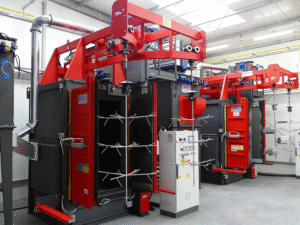
What Are the Key Calibration Specifications for Shot Blasting Intensity of Shot Blasting Machines?
Calibration of shot blasting machine intensity must follow strict specifications to guarantee consistency and accuracy. First, calibration frequency: calibrate before daily operation and after replacing core components (nozzles, blades) or adjusting process parameters. Second, standard preparation: use qualified Almen strips and calibrated measuring tools, and record environmental conditions (temperature, humidity) as they affect strip deformation. Third, operation steps: run the shot blasting machine at the set parameters for 5 minutes to stabilize, then perform the Almen test 3 times consecutively, with the average value as the calibration result. If the result deviates from the target intensity, adjust the shot blasting pressure, abrasive flow rate or nozzle distance, and recalibrate until it meets the requirements. All calibration data must be documented for traceability and quality inspection.
Conclusion
Standard detection and calibration maintain stable shot blasting intensity of shot blasting machines.
For customized shot blasting solutions,
contact us via email:[email protected]