Wrong sand blasting machine causes poor surface quality; right selection matches workpiece features for optimal results.
This guide explains how to select a suitable sand blasting machine by analyzing workpiece size, material, and surface treatment requirements.
Discover key selection criteria for efficient sand blasting operations below.
How to Select a Sand Blasting Machine According to Workpiece Size?
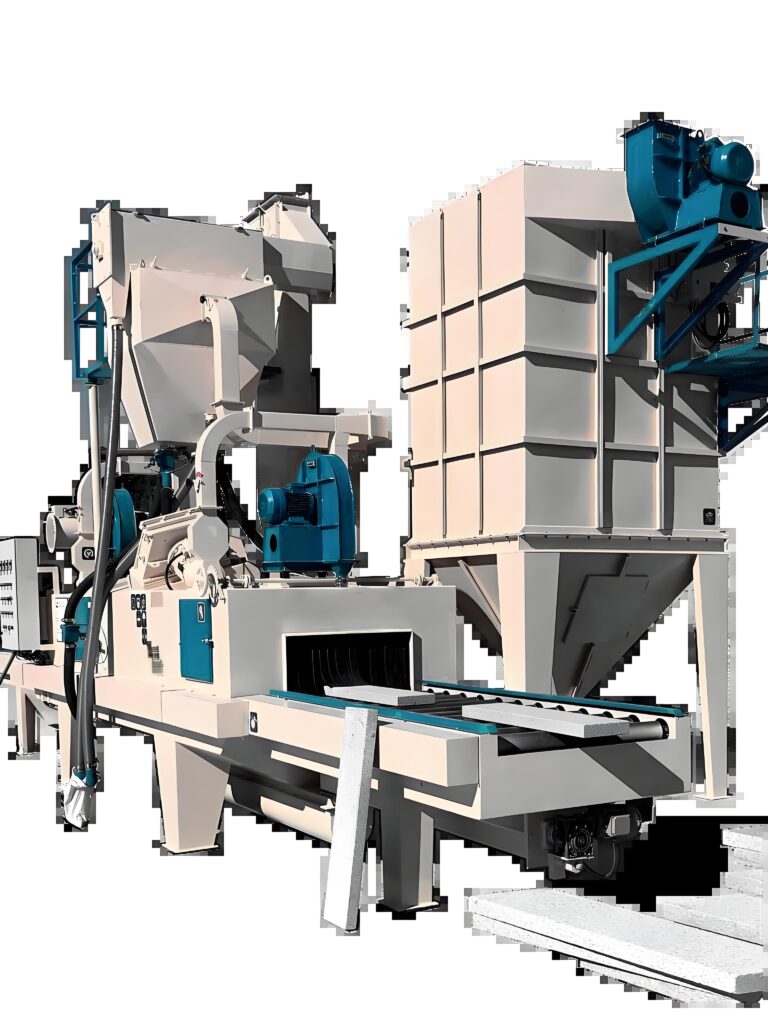
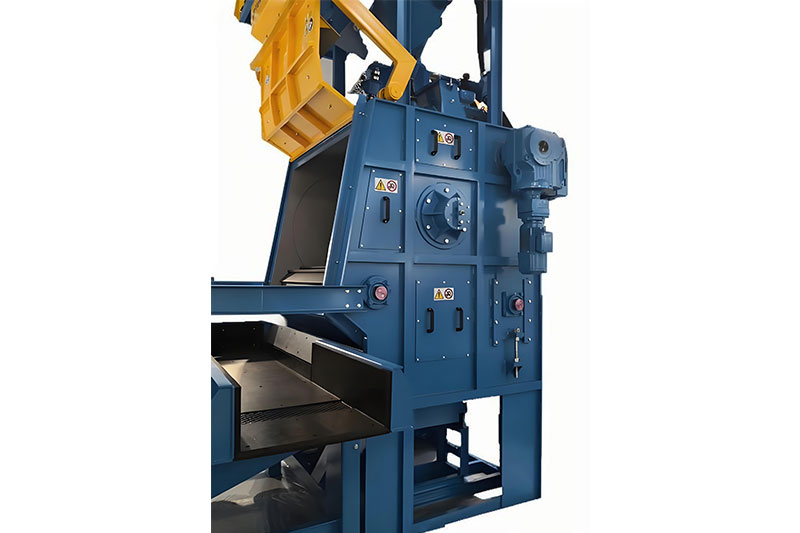
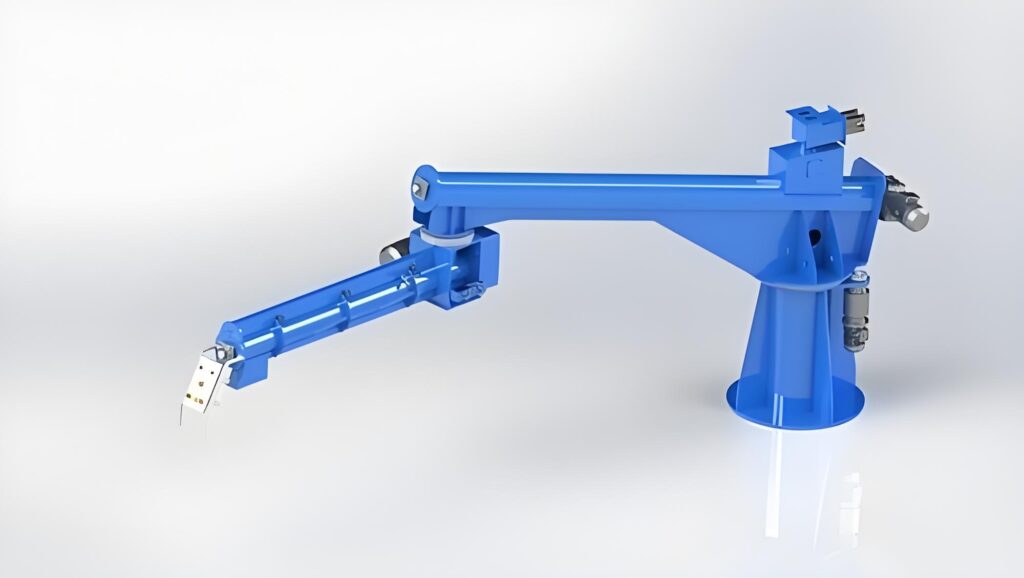
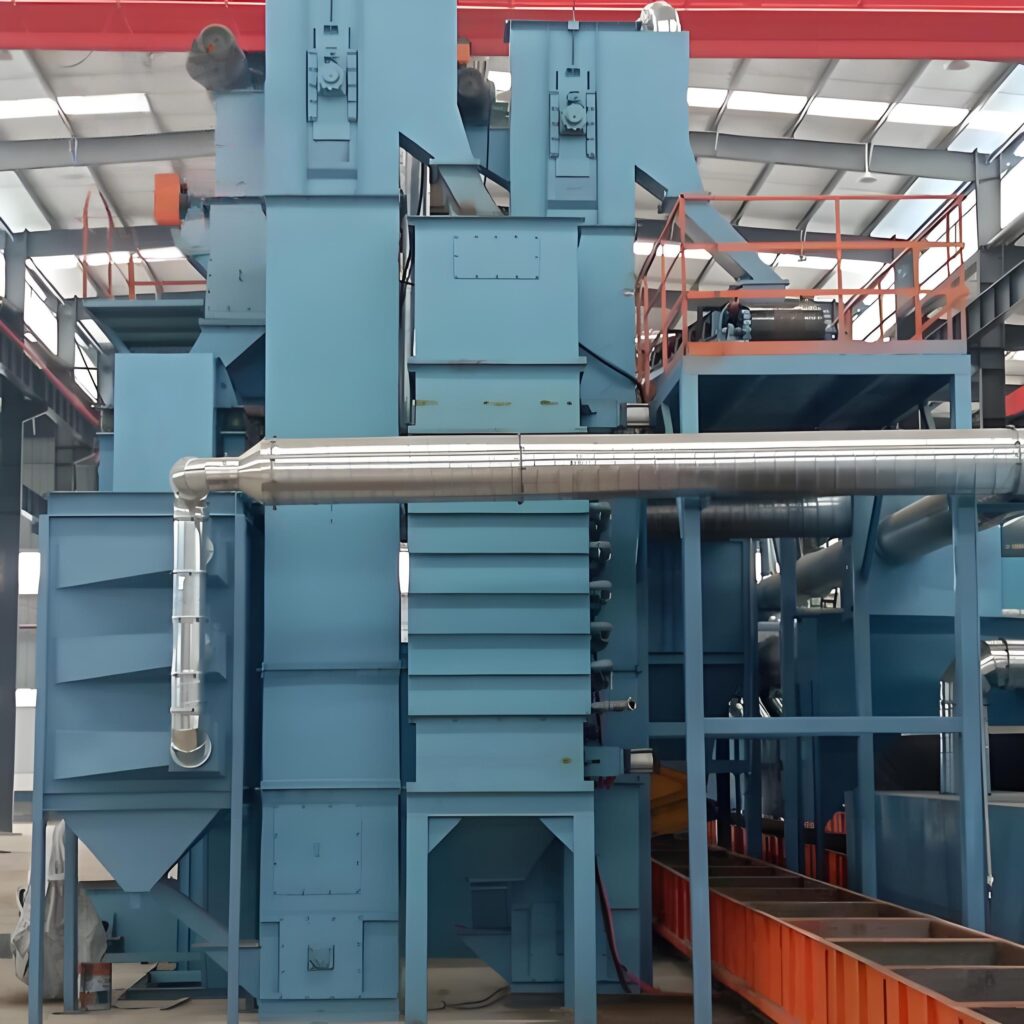
Workpiece size is the primary factor determining the type of sand blasting machine. For small workpieces like hardware accessories, electronic components, or precision auto parts, a cabinet sand blasting machine is the ideal choice. This compact sand blasting machine features a closed workspace, which not only prevents abrasive splashing but also ensures precise control of the blasting area, avoiding damage to delicate workpiece surfaces. For medium-sized workpieces such as engine blocks or steel plates, a portable sand blasting machine offers greater flexibility—operators can move the blasting gun freely to target specific areas without needing to transport heavy workpieces. For large workpieces like wind turbine blades, ship hulls, or large steel structures, a conveyor-type sand blasting machine is indispensable. This industrial-grade sand blasting machine is equipped with a continuous conveyor system that can handle oversized workpieces efficiently, providing uniform surface treatment across the entire workpiece area. Ignoring workpiece size will lead to low efficiency, high energy consumption, and even incomplete surface treatment.
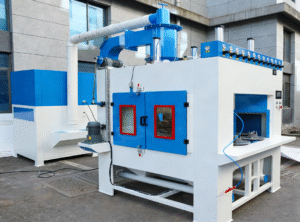
How to Match Sand Blasting Machine Types with Workpiece Materials?
Workpiece material hardness and fragility directly influence the selection of a sand blasting machine and its supporting parameters. For hard materials such as carbon steel, cast iron, or stainless steel, a high-pressure sand blasting machine is required to generate sufficient blasting force to remove rust, scale, and burrs effectively. The high-pressure output of this sand blasting machine can drive coarse abrasives like steel grit to impact the workpiece surface, achieving thorough cleaning and roughening. For brittle and soft materials such as aluminum alloys, copper, glass, or stone, a low-pressure sand blasting machine is more appropriate to prevent surface deformation or cracking. This sand blasting machine uses fine abrasives like glass beads or aluminum oxide powder, delivering gentle but uniform blasting to meet surface finishing needs such as deburring or texture creation. For ultra-precision materials like aerospace titanium alloy parts, a specialized precision sand blasting machine with CNC control is necessary. It can adjust blasting intensity and trajectory with micron-level precision, ensuring the workpiece surface meets strict industry standards without compromising the original structure.
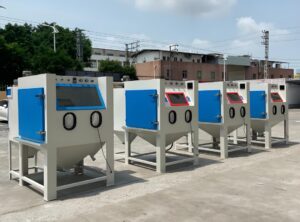
How to Choose a Sand Blasting Machine Based on Surface Treatment Requirements?
Specific surface treatment requirements are another critical factor for sand blasting machine selection. If the goal is rust removal, paint stripping, or oxide layer removal for general industrial parts, a standard suction sand blasting machine can fulfill the task. It is cost-effective, easy to operate, and suitable for most basic surface treatment needs. For workpieces requiring a uniform matte finish, such as decorative metal products or household appliances, a pressure sand blasting machine with adjustable abrasive flow is preferred. It can control the blasting density to create consistent surface textures. For workpieces that demand high cleanliness levels, such as medical device components or semiconductor parts, a dust-free sand blasting machine is a must. This advanced sand blasting machine integrates a high-efficiency dust collection system, preventing abrasive contamination and ensuring the workpiece surface meets sterile or dust-free standards. Additionally, for workpieces requiring localized treatment, such as removing burrs from specific holes or edges, a pencil sand blasting machine with a narrow nozzle is ideal. It can target small areas accurately without affecting the surrounding surfaces.
Conclusion
Matching sand blasting machine to workpiece characteristics ensures optimal surface treatment quality.