Poor thermal management in horizontal molding causes casting defects; optimize it with sand casting molding machine for quality.
This guide details thermal management methods in horizontal molding, using sand casting molding machine to prevent defects in high-temperature casting.
Explore thermal management tips for horizontal molding and sand casting molding machine below.
The Importance of Thermal Management in Horizontal Molding for High-Temperature Casting
Thermal management is a core part of horizontal molding, especially in high-temperature casting, as improper temperature control directly leads to costly defects and undermines the performance of the sand casting molding machine.
- Horizontal molding relies on precise temperature balance throughout the casting process—from mold preheating to molten metal solidification—to ensure uniform cooling and avoid defects like shrinkage, cracks, and cold shuts. The sand casting molding machine, as the core equipment for horizontal molding, plays a key role in implementing effective thermal management, as its design and operation directly influence temperature distribution in the mold.
- Without proper thermal management in horizontal molding, the sand casting molding machine cannot maintain stable mold temperatures, leading to uneven solidification of molten metal. This not only results in scrapped castings but also increases maintenance costs for the sand casting molding Machine, as thermal stress can damage its components.
- For high-temperature casting, horizontal molding’s thermal management becomes even more critical, as extreme temperatures amplify the impact of temperature fluctuations. Implementing scientific thermal management in horizontal molding not only prevents defects but also optimizes the sand casting molding Machine’s efficiency, extending its service life and ensuring consistent production quality.
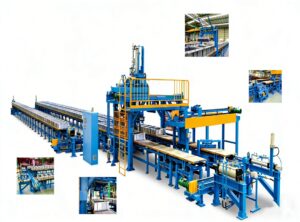
Key Thermal Management Parameters in Horizontal Molding
To prevent defects in high-temperature casting, horizontal molding requires strict control of key thermal management parameters, all of which are closely linked to the performance of the sand casting molding machine.
- The first critical parameter is mold preheating temperature: the sand casting molding machine should preheat the mold to an optimal range (typically 150-300℃) before horizontal molding, ensuring the mold does not cool molten metal too quickly. Too low a preheating temperature leads to cold shuts and incomplete filling, while too high causes mold erosion and casting oxidation.
- The second parameter is molten metal pouring temperature, which must be coordinated with horizontal molding’s thermal management and the sand casting molding machine’s capabilities—excessively high temperatures increase thermal stress, while too low temperatures lead to filling defects.
- The third parameter is cooling rate: the sand casting molding machine should adjust the cooling rate of the mold in horizontal molding to ensure uniform solidification, using cooling systems to avoid localized overheating or rapid cooling.
Additionally, the sand casting molding machine’s insulation performance is a key parameter, as good insulation maintains stable mold temperatures during horizontal molding, reducing temperature gradients that cause cracks. Controlling these parameters effectively ensures horizontal molding produces defect-free high-temperature castings and maximizes the sand casting molding machine’s performance.
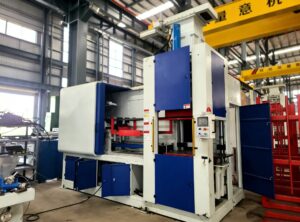
Thermal Management Methods for Mold Preheating in Horizontal Molding
Mold preheating is a foundational step in thermal management for horizontal molding, and the sand casting molding Machine offers specialized methods to ensure consistent preheating and prevent high-temperature casting defects.
- The sand casting molding machine is equipped with integrated preheating systems that heat the mold uniformly before horizontal molding, avoiding localized hot spots or cold areas. One common method is electric resistance heating, where the sand casting molding machine uses embedded heating elements to preheat the mold to the desired temperature, ideal for small to medium-sized horizontal molding operations.
- For large-scale horizontal molding, the sand casting molding machine may use gas heating or infrared heating, which are more efficient and suitable for high-volume high-temperature casting. The sand casting molding machine’s control system monitors the preheating temperature in real time, adjusting the heating intensity to maintain stability—this precision ensures the mold is ready for horizontal molding and molten metal pouring.
- Proper mold preheating via the sand casting molding machine reduces thermal shock when molten metal is poured, preventing mold cracks and ensuring the horizontal molding process proceeds smoothly. This method of thermal management is essential for preventing defects like cold shuts and shrinkage in high-temperature casting.
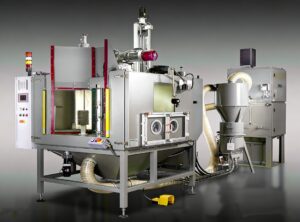
Controlling Cooling Rate in Horizontal Molding to Prevent Defects
Controlling the cooling rate is a critical thermal management technique in horizontal molding, and the sand casting molding machine is designed to adjust cooling speed to prevent high-temperature casting defects.
- The sand casting molding machine integrates cooling systems that regulate the mold’s cooling rate during horizontal molding, ensuring molten metal solidifies uniformly. For complex high-temperature castings, the sand casting molding machine uses differential cooling—applying different cooling rates to different parts of the mold to address varying thicknesses and heat distribution. For example, thick-walled areas of the casting require slower cooling to avoid shrinkage holes, while thin-walled areas can cool faster to improve horizontal molding efficiency.
- The sand casting molding machine’s sensors monitor the mold’s temperature in real time, adjusting the cooling water flow or air circulation to maintain the optimal cooling rate. Without this control, horizontal molding would suffer from uneven cooling, leading to residual stress and cracks in the casting. By leveraging the sand casting molding machine’s cooling capabilities, horizontal molding achieves effective thermal management, preventing defects and ensuring high-quality high-temperature castings.
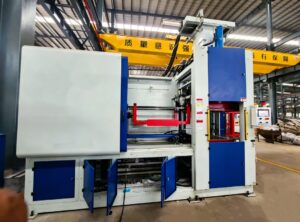
Thermal Insulation Measures for Horizontal Molding and Sand Casting Molding Machine
Thermal insulation is an essential part of thermal management in horizontal molding, as it maintains stable temperatures and reduces energy consumption, while also protecting the sand casting molding machine. The sand casting molding machine is equipped with insulation materials on its mold and chamber surfaces, minimizing heat loss during horizontal molding and ensuring the mold maintains a consistent temperature.
- For horizontal molding in high-temperature casting, the sand casting molding machine uses high-temperature-resistant insulation materials that can withstand extreme temperatures without degrading.
- The sand casting molding machine’s sealed design prevents cold air from entering the molding chamber, which would disrupt temperature stability in horizontal molding. Operators can also enhance thermal insulation in horizontal molding by applying insulation coatings to the mold surface, further reducing heat loss and improving thermal management efficiency.
- Proper thermal insulation not only prevents high-temperature casting defects but also reduces the sand casting molding machine’s energy consumption, lowering operational costs. It also protects the sand casting molding machine’s components from thermal stress, extending the equipment’s service life and ensuring reliable horizontal molding operations.
Common Thermal Management Mistakes in Horizontal Molding and How to Avoid Them
Many manufacturers make avoidable thermal management mistakes in horizontal molding, leading to high-temperature casting defects and damage to the sand casting molding machine.
- One common mistake is neglecting mold preheating: skipping or rushing preheating causes the sand casting molding machine to operate with an unstable mold temperature, leading to cold shuts and mold cracks. To avoid this, always use the sand casting molding machine’s preheating system and follow the recommended temperature range for horizontal molding.
- Another mistake is setting the cooling rate too high, which causes rapid solidification and cracks—instead, adjust the sand casting molding Machine’s cooling system to match the casting’s thickness and material. A third mistake is poor insulation, which leads to temperature fluctuations in horizontal molding; ensure the sand casting molding machine’s insulation materials are in good condition and replace worn parts promptly.
Additionally, failing to monitor temperature in real time during horizontal molding can lead to unnoticed fluctuations—use the sand casting molding machine’s built-in sensors to track temperature and make adjustments as needed. Avoiding these mistakes ensures effective thermal management in horizontal molding, prevents defects, and protects the sand casting molding machine.
Conclusion
Optimize thermal management in horizontal molding with sand casting molding Machine to avoid defects.
For horizontal molding and sand casting molding Machine solutions,
email:[email protected]