Ignorance of shot blasting machine core components causes malfunctions and poor performance. This guide explains their structures and key roles for smooth operation.
This guide details the structure and function of shot blasting machine core components—Blast wheel, Separator, and dust pelletizing system—ensuring optimal equipment performance and longevity.
Explore below the critical design and operational roles of each core component in your shot blasting machine.
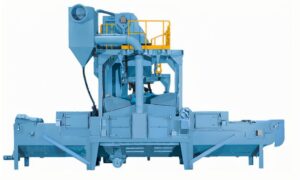
What is the structure and function of the Blast wheel?
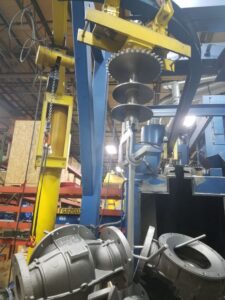
The Blast wheel is the “power core” of a shot blasting machine, responsible for accelerating abrasive media to achieve surface cleaning and strengthening. Its structure consists of four key parts: a high-speed rotating impeller (driven by a 15-30 kW motor), a distributor wheel, directional sleeve, and wear-resistant blades. The impeller rotates at 2000-3000 RPM, while the distributor wheel evenly distributes abrasive media (steel shot, steel grit) to the blades. The directional sleeve adjusts the media’s angle, ensuring targeted impact on workpieces. The wear-resistant blades (made of high-chromium steel) generate centrifugal force, accelerating media to 60-80 m/s. Functionally, the Blast wheel converts mechanical energy into kinetic energy, enabling abrasive media to strip rust, scale, and burrs from workpiece surfaces. A well-designed Blast wheel ensures uniform media distribution and consistent impact force, directly influencing the shot blasting machine’s cleaning efficiency. Regular maintenance of the Blast wheel—such as replacing worn blades—prevents uneven blasting and extends the shot blasting machine’s service life. Without a high-performance Blast wheel, the shot blasting machine cannot deliver the required surface treatment quality, leading to production delays and increased costs.
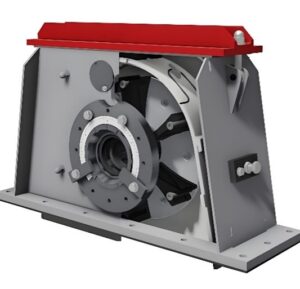
How is the Separator structured, and what role does it play?
The Separator is a vital component of the shot blasting machine’s media recycling system, featuring a structure that ensures efficient separation of reusable abrasive media, debris, and dust. Its typical design includes a feeding hopper, vibrating screen, cyclone separator, and discharge chute. The mixture of used media, workpiece debris, and dust enters the Separator via the feeding hopper. The vibrating screen first removes large debris (e.g., workpiece fragments) that could damage the machine à projection de grenaille. The remaining mixture then enters the cyclone separator, which uses centrifugal force to separate heavy, reusable media from light dust and fine debris. The clean media is discharged through the chute back to the Blast wheel for recycling, while dust and debris are sent to the dust pelletizing system. The Separator’s core role is to maintain the quality of abrasive media, ensuring only clean, undamaged particles are recirculated. This not only reduces media consumption by 80-90% but also protects the Blast wheel from premature wear. A faulty Separator leads to contaminated media, causing uneven blasting and increased maintenance costs for the shot blasting machine. By efficiently separating media and contaminants, the Separator ensures the shot blasting machine operates cost-effectively and sustainably.
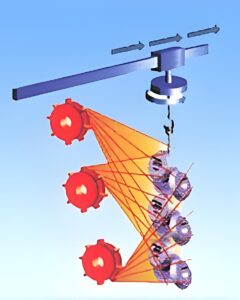
What constitutes the dust pelletizing system, and why is it essential?
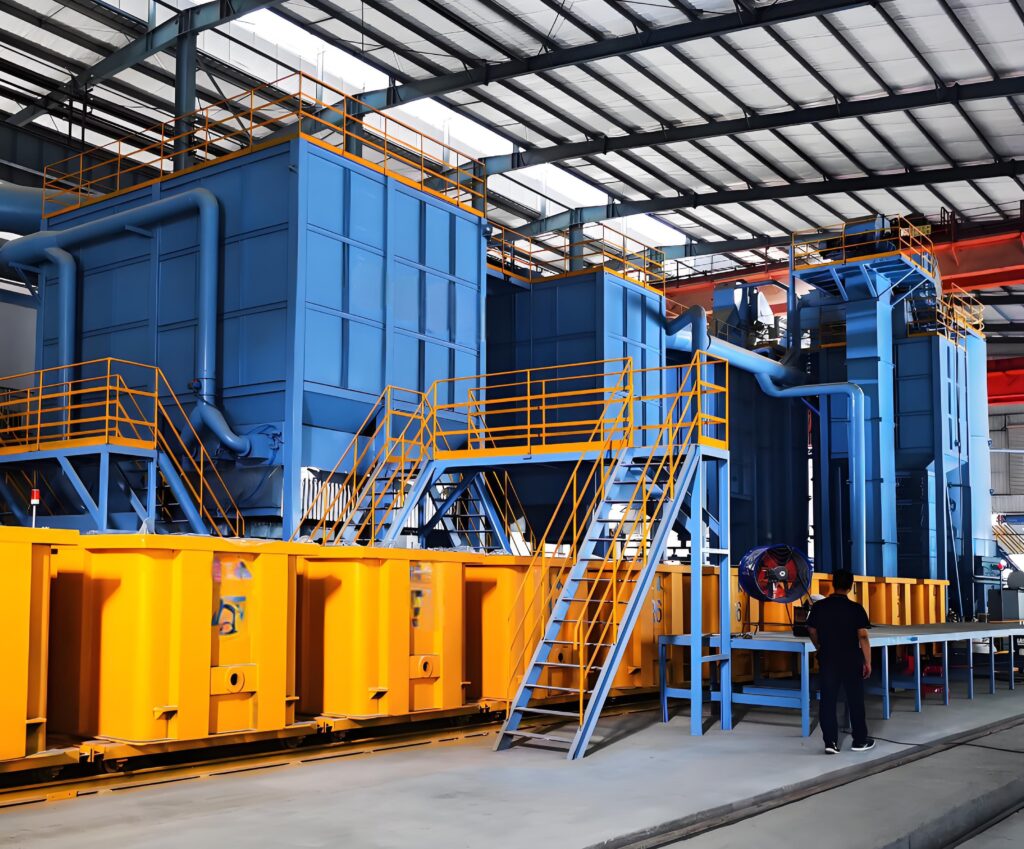
The dust pelletizing system of a shot blasting machine is a comprehensive structure designed to capture and treat dust generated during the blasting process, consisting of a dust hood, ductwork, cyclone pre-separator, bag filter, and exhaust fan. The dust hood surrounds the blast chamber, collecting dust at the source. Ductwork transports the dust to the cyclone pre-separator, which removes large dust particles. The remaining fine dust then passes through the bag filter (with a filtration efficiency of ≥99.9%), where dust is trapped on the filter bags. The exhaust fan provides negative pressure to drive the air flow, and clean air is discharged into the atmosphere. Functionally, the dust pelletizing system is essential for environmental compliance and worker safety. It prevents harmful dust (e.g., metal oxides) from being released into the workplace, protecting operators from respiratory illnesses. Additionally, the dust pelletizing system ensures the shot blasting machine meets local environmental regulations, avoiding fines and operational disruptions. A high-efficiency dust pelletizing system also prevents dust buildup in the shot blasting machine’s internal components, such as the Blast wheel and Separator, reducing maintenance needs. Without a reliable dust pelletizing system, the shot blasting machine cannot operate safely or legally, making it an indispensable component for any industrial shot blasting operation.
How do these core components collaborate in a shot blasting machine?
The seamless collaboration between the Blast wheel, Separator, and dust pelletizing system is critical to the shot blasting machine’s overall performance. The process begins with the Blast wheel accelerating abrasive media to clean workpieces. After impact, the mixture of used media, debris, and dust falls into the Separator. The Separator filters out reusable media, sending it back to the Blast wheel for recycling, while directing dust and debris to the dust pelletizing system. The dust pelletizing system then captures and treats the dust, ensuring clean air emission. This closed-loop collaboration optimizes efficiency: the Blast wheel delivers consistent cleaning power, the Separator minimizes media waste, and the dust pelletizing system maintains a safe, compliant work environment. For example, when the shot blasting machine processes a batch of castings, the Blast wheel blasts the workpieces, the Le séparateur recycle le média pour une utilisation continue, et le système de pelletisation de poussière empêche l'accumulation de poussière dans la chambre de blast. Un dysfonctionnement dans un composant perturbe l'ensemble du système—par exemple, un séparateur obstrué réduit l'approvisionnement en média pour la roue de blast, diminuant l'efficacité de nettoyage, tandis qu'un système de pelletisation de poussière défectueux entraîne une accumulation de poussière et des risques pour la sécurité. Leur fonctionnement collaboratif garantit que la machine de sablage à jet fournit un traitement de surface fiable, efficace et sûr.
Conclusion
Comprenez ces composants essentiels pour maintenir les performances, l'efficacité et la sécurité de la machine de sablage à jet.
E-mail :[email protected]
 French
  English
  Russian
  Spanish
  Portuguese
  Indonesian
  Thai
Thai