
Traditional shot blasting machine downtime is frequent and maintenance costly; IoT monitoring and remote maintenance optimize operations effectively.
This guide details IoT monitoring and remote maintenance applications in smart shot blasting machines, covering implementation, advantages and industry value for shot blasting operations.
Explore the following sections to master the core logic and application details of this smart technology.
How Is IoT Monitoring System Implemented in Smart Shot Blasting Machines?
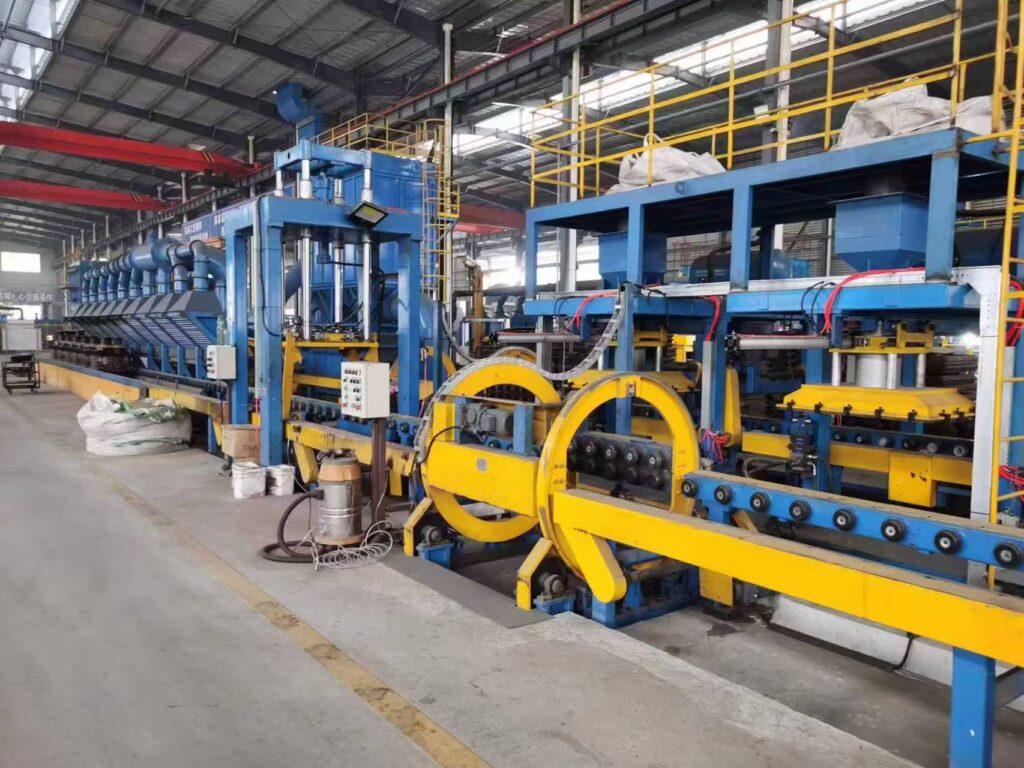
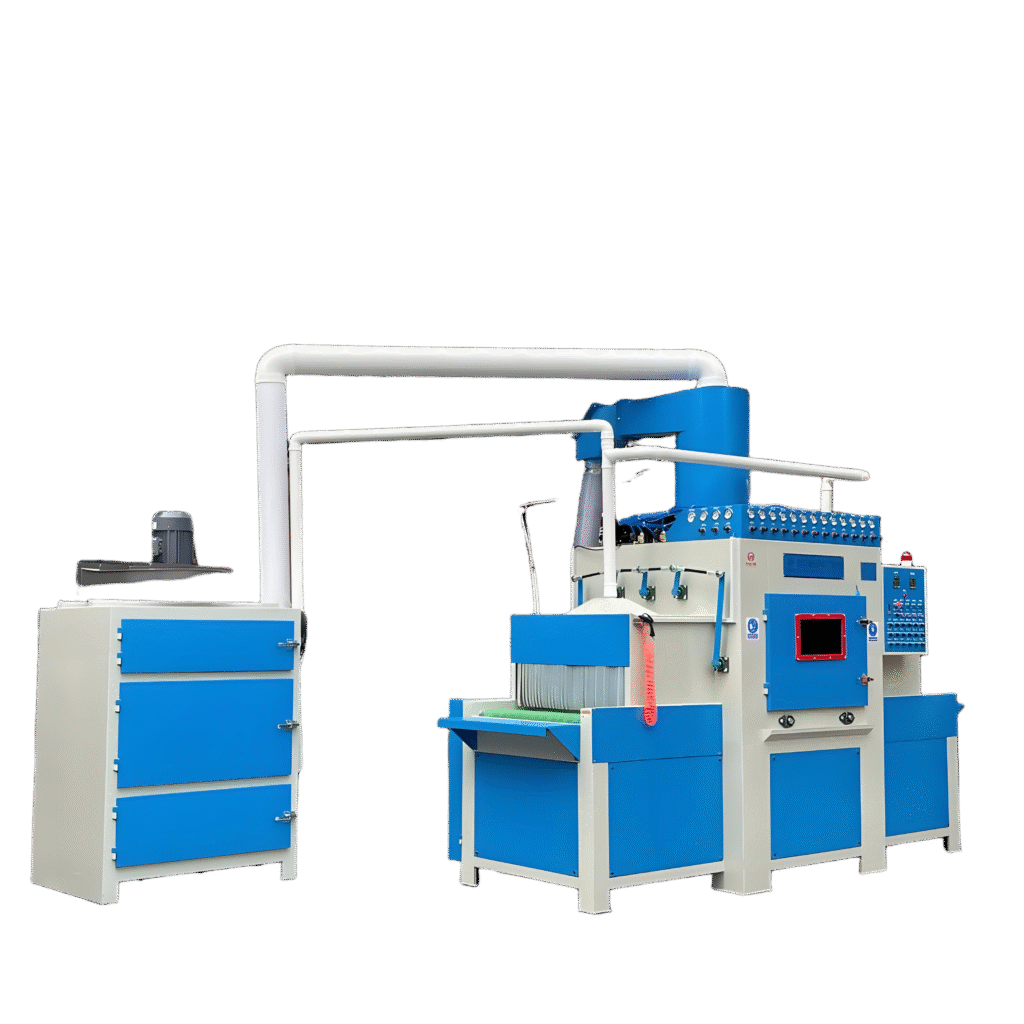
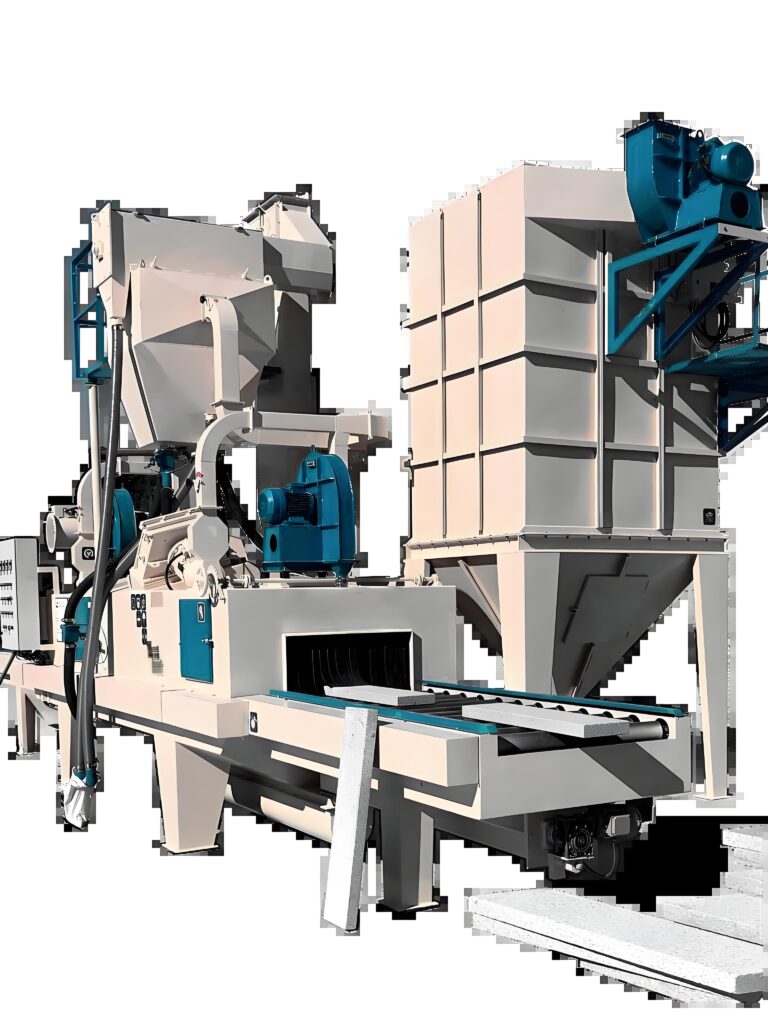
The implementation of IoT monitoring systems in smart shot blasting machines relies on a multi-layer architecture integrating data collection, transmission, processing and application, which fundamentally transforms the traditional shot blasting operation mode. At the data collection layer, a variety of high-precision sensors are installed on key components of la machine de sablage, such as temperature sensors on blast wheels, speed sensors on separators and elevators, and pressure sensors on dust removal systems. These sensors work with PLC controllers to real-time capture critical operational data including shot blasting intensity, abrasive consumption, energy usage, component temperature and equipment operating speed. The data transmission layer uses IoT modules to send the collected data to the cloud platform through 4G, 5G or wired networks, serving as a communication hub between the shot blasting machine and the cloud. At the data processing layer, the cloud platform performs deep analysis on the uploaded data, establishes normal operation baselines, and identifies abnormal data deviations. Finally, at the application layer, the processed data is presented to users through PC terminals and mobile Apps in the form of visual dashboards, enabling real-time monitoring of shot blasting machine status and timely alert pushes. This end-to-end IoT monitoring system ensures comprehensive and transparent oversight of the entire shot blasting process, laying a foundation for intelligent operation and maintenance.
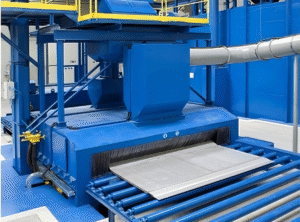
What Are the Core Applications of Remote Maintenance in Smart Shot Blasting Machines?
Remote maintenance, built on IoT monitoring, has become a key feature of smart shot blasting machines, significantly improving maintenance efficiency and reducing operational costs. One of the core applications is predictive maintenance: by analyzing real-time operational data and historical maintenance records, the system can predict potential failures of shot blasting machine components, such as wear of blast wheels or blockages of filters, and send maintenance reminders to users in advance. This proactive approach avoids unplanned downtime, which is crucial for foundries and manufacturing plants where shot blasting machines operate 24/7. Another important application is remote troubleshooting and parameter adjustment. When a shot blasting machine malfunctions, technicians can access the machine’s operational data and real-time status remotely through the cloud platform, diagnose the problem without being on-site, and even adjust process parameters or upload repair programs remotely for minor faults. For example, in a Guangxi foundry, the remote maintenance system of smart shot blasting machines enabled technicians to resolve a separator failure remotely, reducing downtime by 80% compared to on-site maintenance. Additionally, remote maintenance systems automatically record maintenance logs, including component replacements and parameter modifications, facilitating lifecycle management of shot blasting machines and optimizing long-term maintenance strategies.
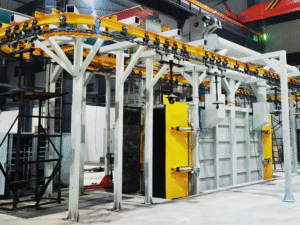
What Advantages Do IoT Monitoring and Remote Maintenance Bring to Shot Blasting Operations?
The integration of IoT monitoring and remote maintenance into smart shot blasting machines brings multiple transformative advantages to shot blasting operations, enhancing efficiency, quality and cost-effectiveness. In terms of operational efficiency, real-time IoT monitoring eliminates manual inspection errors and delays, enabling timely detection of process deviations. For instance, abnormal abrasive consumption can be identified immediately, ensuring stable shot blasting intensity and improving workpiece processing consistency. Remote maintenance significantly reduces maintenance response time, especially for shot blasting machines located in remote areas, as on-site technician dispatch is no longer necessary for most faults. This combination has been proven to reduce unplanned downtime by approximately 70% . In terms of cost control, predictive maintenance reduces the frequency of premature component replacements and lowers maintenance labor costs. IoT monitoring also optimizes resource usage, such as precise control of abrasive and energy consumption, cutting operational costs by 15-20% . In terms of safety and sustainability, real-time monitoring of dust concentration and noise levels in shot blasting operations ensures compliance with environmental standards, protecting worker health. De plus, l'utilisation optimisée de l'énergie et la réduction des déchets rendent les opérations de sablage par jet plus respectueuses de l'environnement, s'alignant sur les tendances mondiales de fabrication durable. .
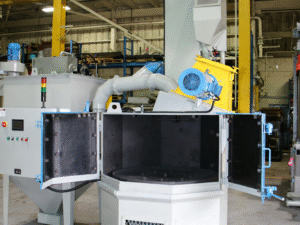
Quelle est la valeur d'application de cette technologie intelligente dans les secteurs clés ?
Les technologies de surveillance IoT et de maintenance à distance pour les machines de sablage par jet intelligent ont une valeur d'application significative dans des secteurs clés tels que l'automobile, l'aérospatiale, la fonderie et la construction. Dans l'industrie automobile, où le traitement de surface précis des composants est crucial, la surveillance IoT garantit une qualité de sablage par jet constante, améliorant l'adhérence des revêtements et prolongeant la durée de vie des composants. La maintenance à distance garantit des lignes de production ininterrompues, soutenant la fabrication automobile en grande quantité. Dans le secteur aérospatial, des normes de qualité et de sécurité strictes exigent une traçabilité des données en temps réel des processus de sablage par jet, ce que les systèmes de surveillance IoT fournissent en enregistrant chaque paramètre opérationnel. Pour les projets de construction à grande échelle et de construction navale, des machines de sablage par jet intelligentes équipées de ces technologies peuvent être déployées sur des sites de construction éloignés, la maintenance à distance assurant un fonctionnement continu sans visites fréquentes de techniciens. Dans les fonderies, qui s'appuient fortement sur les machines de sablage par jet pour le nettoyage de surface des pièces moulées, la technologie réduit les pertes en temps d'arrêt et les coûts de maintenance, améliorant l'efficacité de la production globale. Le marché mondial des machines de sablage par jet croît régulièrement, alimenté par ces technologies, avec un TCAC prévisionnel de 5,20% de 2025 à 2032, reflétant la reconnaissance généralisée de leur valeur industrielle.
Conclusion
La surveillance IoT et la maintenance à distance redéfinissent les opérations des machines de sablage par jet intelligentes de manière efficiente.
 French
  English
  Russian
  Spanish
  Portuguese
  Indonesian
  Thai
Thai