Shot blasting machine faults cause downtime; this guide teaches self-inspection and repair to restore shot blasting quickly.
This guide details common faults of shot blasting machine and wheelblast equipment, providing step-by-step self-inspection and repair methods to ensure smooth shot blasting.
Learn to identify, inspect and repair shot blasting machine faults on your own below.
What Are the Most Common Faults of Shot Blasting Machine During Shot Blasting?
During shot blasting operations, shot blasting machine and wheelblast equipment are prone to several common faults that can interrupt work, and understanding these faults is the first step to self-inspection and repair.
- The most frequent faults include abnormal noise during operation, insufficient shot blasting intensity, uneven shot blasting effect, machine jamming, and dust emission exceeding standards. Abnormal noise usually comes from worn components of wheelblast equipment, such as blast wheels or bearings, which produce squeaking or rumbling sounds during high-speed rotation.
- Insufficient shot blasting intensity often results from clogged shot media pipelines or worn wheelblast equipment impellers, leading to poor cleaning effect on workpieces. Uneven shot blasting is typically caused by improper adjustment of del equipo de wheelblast parameters or uneven wear of blast wheels, resulting in inconsistent surface treatment. Machine jamming is often due to excessive shot media accumulation or foreign objects entering the shot blasting machine, blocking the operation of moving parts.
Dust emission exceeding standards is usually caused by faults in the shot blasting machine’s dust removal system, which affects the environment and operator health. Familiarizing yourself with these common faults helps you quickly locate problems during self-inspection and carry out targeted repairs.
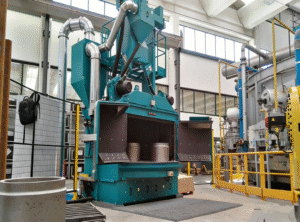
How to Self-Inspect Abnormal Noise Fault of Shot Blasting Machine and Wheelblast Equipment?
Abnormal noise is a common fault of shot blasting machine and wheelblast equipment during shot blasting, and self-inspection can effectively locate the cause and complete simple repairs.
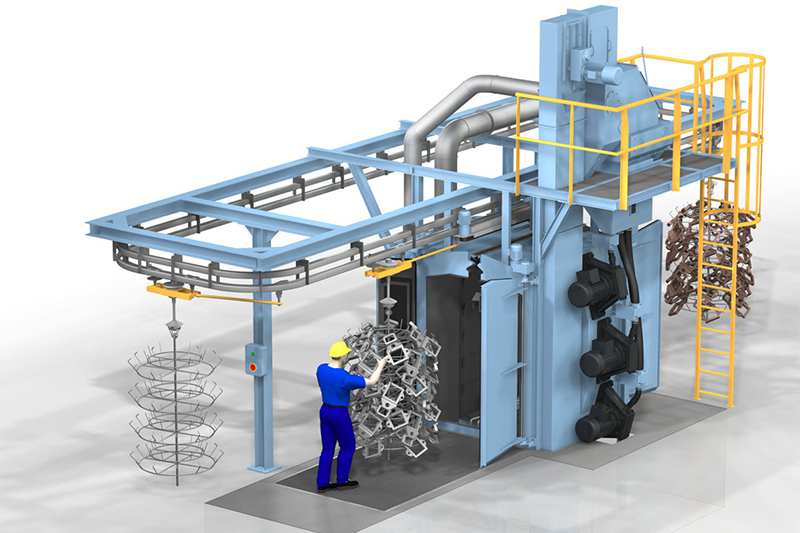
- Stop the shot blasting machine immediately when abnormal noise is heard to avoid further damage to components. Then, start self-inspection from the equipo de chorreado por rueda de alta potencia, as it is the core component that generates noise. Check if the blast wheel of the wheelblast equipment is worn, loose, or deformed—worn blast wheels will produce irregular noise during rotation, and loose bolts fixing the blast wheel will cause vibration and noise.
- Inspect the bearings of the wheelblast equipment; lack of lubrication or worn bearings will emit squeaking sounds. Check the shot media in the shot blasting machine—if there are large foreign objects mixed in, they will collide with the wheelblast equipment and produce noise.
Additionally, check the liner of the shot blasting machine; loose or worn liners will vibrate during calidad del granallado and generate noise. After locating the cause, you can repair it yourself: tighten loose bolts, add lubricating oil to bearings, replace worn blast wheels or liners, and remove foreign objects. This self-inspection and repair method can quickly resolve abnormal noise faults and restore normal shot blasting operations.
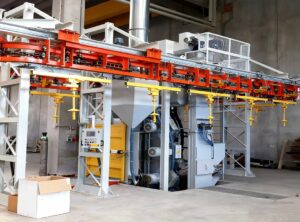
How to Self-Inspect and Repair Insufficient Shot Blasting Intensity of Shot Blasting Machine?
Insufficient shot blasting intensity of shot blasting machine directly affects shot blasting quality, and it can be effectively solved through self-inspection and simple repairs.
- Self-inspect the shot media supply system: check if the shot media hopper is insufficient, if the shot media pipeline is clogged, or if the shot media is too worn. Insufficient shot media will lead to insufficient impact force during calidad del granallado, while clogged pipelines will block the supply of shot media, and worn shot media will reduce the cleaning effect. If the problem is insufficient shot media, add new shot media; if the pipeline is clogged, disassemble and clean it.
- Inspect the wheelblast equipment: check if the impeller and blast wheel are worn, as worn components will reduce the speed and impact force of shot media. If the wheelblast equipment components are worn, replace them with new ones.
Additionally, check the shot blasting machine’s pressure parameters; improper pressure adjustment will also lead to insufficient shot blasting intensity. Adjust the pressure to the standard range according to the shot blasting machine manual. Through this self-inspection and repair, the shot blasting intensity of the máquina de chorro de arena can be restored, ensuring high-quality shot blasting.
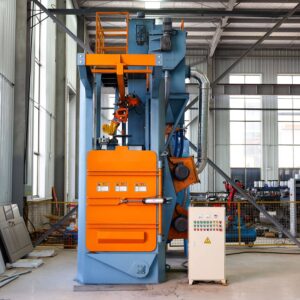
How to Self-Inspect and Repair Shot Blasting Machine Jamming Fault?
Shot blasting machine jamming is a common fault that interrupts shot blasting operations, and it can be quickly resolved through self-inspection and simple repairs.
- Corte el suministro eléctrico of the shot blasting machine to ensure safe self-inspection and repair. Then, check the shot media accumulation: excessive shot media in the shot blasting machine’s working chamber or pipeline will cause jamming. Open the discharge port to clean up excess shot media, and check if the shot media is agglomerated—agglomerated shot media can be crushed or replaced.
- Inspect the wheelblast equipment: check if foreign objects (such as metal scraps, bolts, or large debris) are stuck in the blast wheel or impeller, which will cause the wheelblast equipment to jam. Use tools to remove foreign objects and check if the wheelblast equipment components are damaged; if so, repair or replace them.
Additionally, check the conveyor system of the máquina de chorro de arena; if the conveyor is stuck, check for foreign objects or loose components and adjust accordingly. After completing the self-inspection and repair, test the shot blasting machine to ensure it operates normally without jamming, and then resume shot blasting operations.
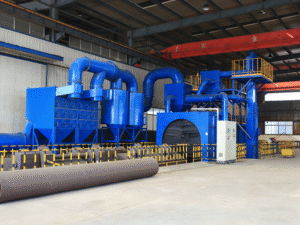
¿Cómo evitar fallas comunes de la máquina de chorreado y del equipo de chorro de ruedas?
Evitar las fallas comunes de la máquina de chorreado y del equipo de chorro de ruedas es más eficiente que repararlas, y se puede lograr a través de una operación estandarizada y un mantenimiento regular.
- Operar la máquina de chorreado de acuerdo con el manual: no sobrecargar la máquina, ajustar razonablemente los parámetros del equipo de chorro de ruedas y evitar operaciones inapropiadas que causen desgaste de los componentes.
- Realizar mantenimiento regular de la máquina de chorreado y del equipo de chorro de ruedas: limpiar regularmente la tubería de medios de chorro y la cámara de trabajo para evitar obstrucciones; añadir aceite lubricante a los componentes móviles de del equipo de wheelblast regularmente para reducir la fricción; inspeccionar las piezas de desgaste (como ruedas de chorro, impulsoras y revestimientos) regularmente y reemplazarlas a tiempo.
- Usar medios de chorro de alta calidad que coincidan con la máquina de chorreado y el equipo de chorro de ruedas para evitar el desgaste excesivo de los componentes.
- Establecer un registro de fallas: registrar el tipo, la causa y el método de reparación de cada falla de la máquina de chorreado, resumiendo la experiencia para evitar fallas repetidas.
Siguiendo estas medidas, puedes reducir significativamente la ocurrencia de fallas comunes de la máquina de chorreado y del equipo de chorro de ruedas, asegurar operaciones de chorreado continuas y estables, y prolongar la vida útil del equipo.
Conclusión
Dominar habilidades de autoinspección para reparar fallas de la máquina de chorreado y del equipo de chorro de ruedas.
Para orientación profesional sobre fallas de la máquina de chorreado,
contáctenos: [email protected]
 Spanish
  English
  Russian
  Portuguese
  French
  Indonesian
  Thai
Thai